A close-up view of a worn but cherished leather notebook lies partially open on a quilted blanket in soft, neutral tones, a delicate metal bookmark in the shape of an olive branch peeking from its pages. Nearby, a small amber glass bottle labeled “patience” and a folded ivory handkerchief with embroidered edges rest gently. Overcast window light bathes the scene in a gentle, diffused glow, softening every edge and creating almost imperceptible shadows. The background falls away into a smooth, creamy blur. Photographic realism, centered composition, and a muted color palette create a mood of quiet courage, chronic illness, and unseen endurance lived with grace and faith.

Empowering Through Reflection and Story

A closer look at how chronic illness reshapes vocation, ceremony, and the moral imagination, offering compassionate leadership grounded in perseverance.

About

My Story

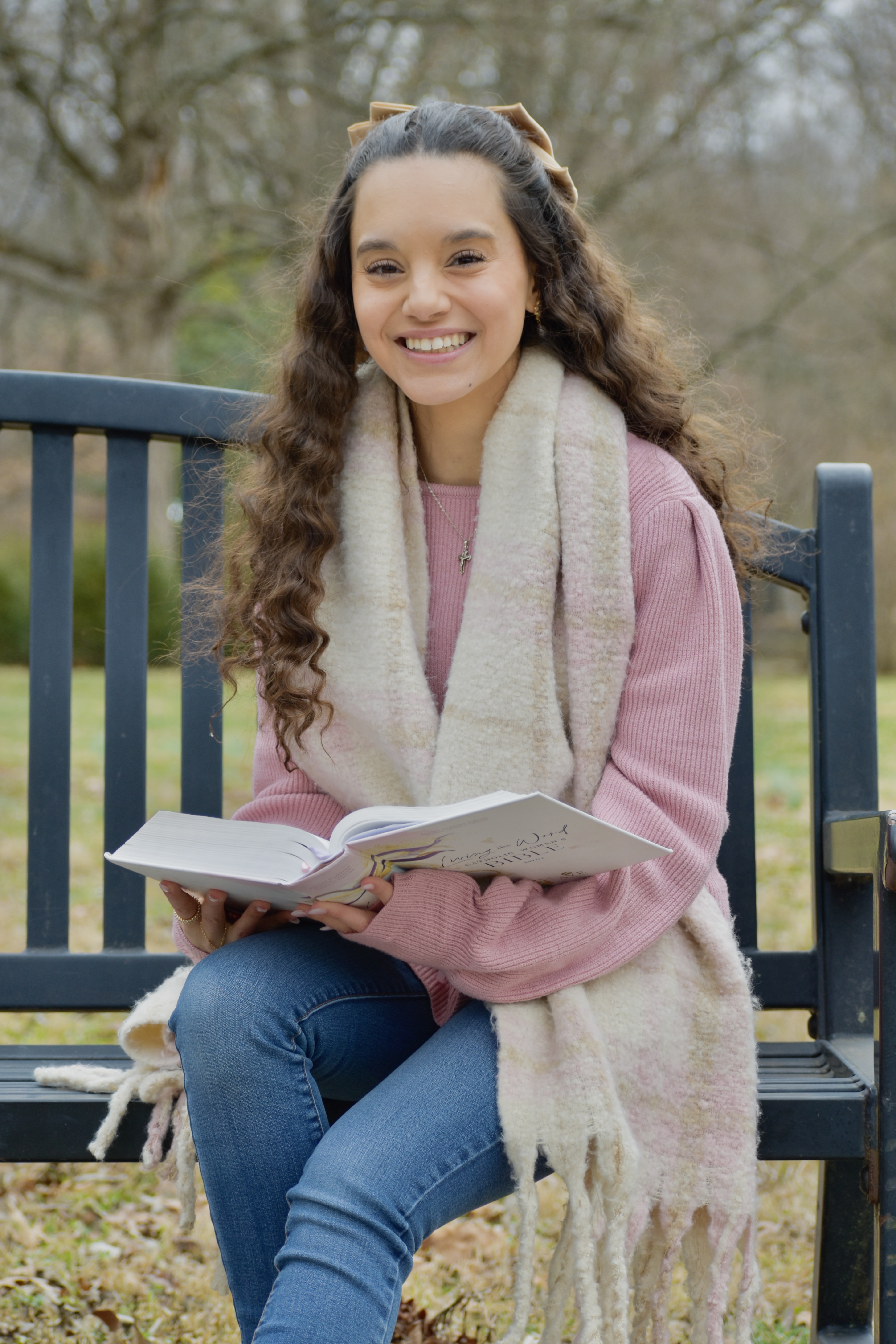
Hi, I’m Maria Valentina Almeida. From as far back as I can remember, I’ve always known I wanted to do something meaningful, authentic, and extraordinary with my life. Growing up with significant health challenges—from complex surgeries as a child to navigating life with a chronic condition—I learned early on the value of resilience, hope, and the human spirit. These experiences shaped not just who I am, but how I want to show up in the world.

It wasn’t until about a year ago that I truly discovered the power of testimony and vulnerability. I realized that sharing my story, from my struggles, my faith, and the lessons I’ve learned, I could hopefully inspire, encourage, and connect with others. That realization sparked a new dream: to pursue motivational speaking full-time, using my voice and perspective to guide others through life’s hidden seasons with courage, reflection, and hope.

Through my writing and speaking, I strive to create a space where people feel seen, valued, and inspired to embrace their own journey. My hope is that when you read my words or hear me speak, you feel welcomed, understood, and reminded that even in life’s most challenging moments, there is purpose, meaning, and possibility.
A hardcover journal bound in textured linen the color of warm stone lies open on an oak writing desk, its creamy pages filled with neat, handwritten reflections fading softly toward the edges. A brass fountain pen rests across the center fold, a small pool of fresh ink glistening near a sentence about hope. Diffused late-afternoon light pours through an unseen window, casting long, gentle shadows and a calm, contemplative glow. In the softly blurred background, a simple ceramic cross and a single white candle sit on the desk. Photographic realism, eye-level composition, shallow depth of field, and a minimalist, sophisticated aesthetic create a mood of quiet faith and dignified introspection.
A simple wooden table holds a small arrangement of symbolic objects: a smooth river stone engraved with the word “Dignity,” a delicate glass of clear water catching the light, and a weathered leather-bound book with a pressed olive leaf marking a page. Behind them, an unfurled linen cloth in muted cream drapes softly, creating gentle folds. Soft morning light from the left washes over the scene, creating subtle highlights and tender shadows, evoking a sense of reverence and calm. The composition follows the rule of thirds, with a shallow depth of field that blurs the background into a gentle haze. Photographic realism and a clean, refined style underscore themes of faith, resilience, and inherent human worth.
On a nightstand of pale, matte wood, a small stack of carefully chosen books on philosophy and spirituality is topped with a pair of thin, gold-rimmed reading glasses and a sprig of dried lavender. A ceramic mug in muted dove gray, faint steam curling from its surface, rests on a linen coaster beside them. Outside the frame, a single bedside lamp casts warm, focused light across the objects, leaving the background in soft, velvety shadow. The overall mood is intimate and reflective, suggesting long evenings of thought and prayer. Photographic realism with a slightly elevated angle and shallow depth of field emphasizes texture and subtle detail, conveying dignity amid quiet, hidden seasons of life.
A simple wooden lectern stands alone in a softly lit room, its surface polished from years of use, supporting an open manuscript printed on thick, ivory paper with carefully spaced, elegant text. A single, slim glass of water sits to the side, a faint ring of condensation forming beneath it. Behind the lectern, vertical panels of warm, textured fabric in muted earth tones create a dignified backdrop. Overhead spotlights cast a focused yet gentle pool of light on the lectern, leaving the surroundings subtly darkened. Photographic realism, eye-level framing, and a slightly wide composition convey the solemn anticipation of motivational and ceremonial speaking, suffused with quiet authority and ethical reflection.

Reviews

A close-up view of a worn but cherished leather notebook lies partially open on a quilted blanket in soft, neutral tones, a delicate metal bookmark in the shape of an olive branch peeking from its pages. Nearby, a small amber glass bottle labeled “patience” and a folded ivory handkerchief with embroidered edges rest gently. Overcast window light bathes the scene in a gentle, diffused glow, softening every edge and creating almost imperceptible shadows. The background falls away into a smooth, creamy blur. Photographic realism, centered composition, and a muted color palette create a mood of quiet courage, chronic illness, and unseen endurance lived with grace and faith.

Anonymous

Though the Fig Tree is a window into Maria’s journey as she waits for a kidney. She writes with transparency, beautifully capturing her raw struggles with health and patience while revealing how those very challenges have become a silver lining, drawing her closer to God. Reading her story leaves you deeply inspired to persevere through your own trials and to seek the Lord with the same unwavering devotion Maria shows every day.

A hardcover journal bound in textured linen the color of warm stone lies open on an oak writing desk, its creamy pages filled with neat, handwritten reflections fading softly toward the edges. A brass fountain pen rests across the center fold, a small pool of fresh ink glistening near a sentence about hope. Diffused late-afternoon light pours through an unseen window, casting long, gentle shadows and a calm, contemplative glow. In the softly blurred background, a simple ceramic cross and a single white candle sit on the desk. Photographic realism, eye-level composition, shallow depth of field, and a minimalist, sophisticated aesthetic create a mood of quiet faith and dignified introspection.

Anonymous

Maria is a poised speaker who, by virtue of her authentic vulnerability and openness, invites the audience to lean into what she has to say. In addition to the resonance of the words and the journey she takes you on as a listener, Maria also has a manner of speaking that inspires and moves without an unnecessarily boisterous affectation. Rather, she soars in subtlety and with the power of the quiet moments between the words. Her speeches demonstrate these qualities, such that she has compelled her audience into standing ovations. Clear and compelling, Maria’s speech weaves the art of storytelling with engendering empathy to leave a lasting impression on everyone.